
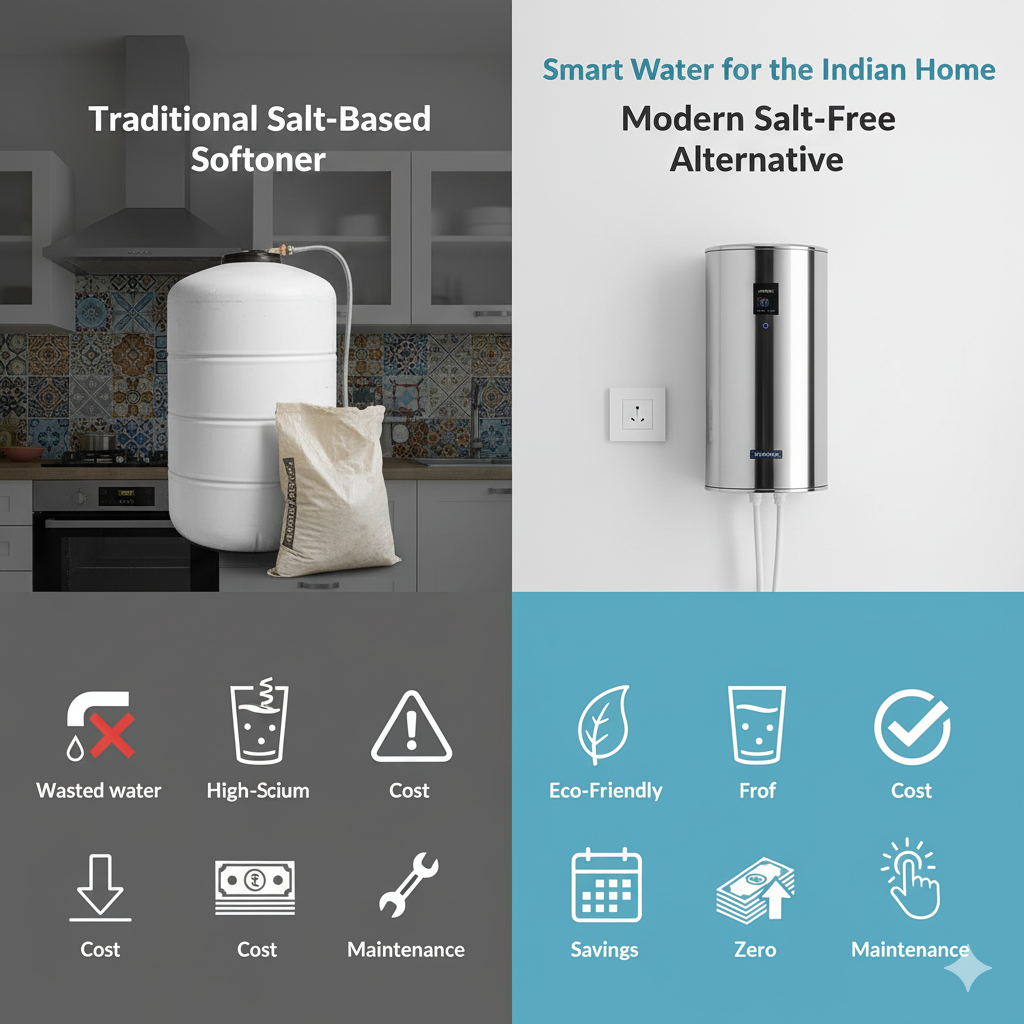
For years, the salt-based water softener has been the default solution for combating hard water. It promises to solve the common household nightmares of limescale, dull clothes, and dry skin.
However, for a modern Indian home, this “solution” comes with a host of avoidable issues—from significant health and environmental concerns to hidden costs and demanding maintenance.
It’s time to look past the outdated Ion-Exchange process and understand the true drawbacks of these systems.
1. Health and Safety Concerns: More Sodium Than You Need
The fundamental issue with traditional softeners is their mechanism: they replace the hardness-causing minerals (Calcium and Magnesium) with Sodium. This results in drinking water that is fundamentally changed and may pose a health risk.
- High Sodium in Drinking Water: The amount of sodium added to your water is directly proportional to its original hardness. In many parts of India with extreme hard water, the resulting softened water has a high sodium content. For individuals with existing conditions like hypertension (high blood pressure) or those following doctor-prescribed low-sodium diets, consuming this water is strongly discouraged. This sodium overload can potentially compromise heart and kidney health.
- Essential Mineral Depletion: By stripping the water of calcium and magnesium—minerals that are beneficial to health—the system reduces the nutritional quality of your drinking water.
2. High Running Costs and Constant Maintenance Hassles
A traditional softener is not a “fit-and-forget” appliance; it demands continuous investment of both time and money.
- Ongoing Salt Expenses: Salt is the consumable fuel for the system’s regeneration. Homeowners face the recurring, mandatory cost of buying large quantities of industrial-grade salt, adding significantly to the annual household budget (averaging at least ₹8,000 – ₹15,000 or more per year depending on water usage and hardness).
- Burden of Labour: This system forces you into the laborious task of purchasing, transporting, and manually loading heavy, bulky salt bags into the unit multiple times a year. For many, this is a cumbersome chore.
- Annual Servicing and Power Drain: Beyond the salt, the complex electronic controls and valves require electric power to run (adding to your energy bill) and often need a costly annual service contract to prevent breakdowns.
3. Environmental and Plumbing Damage: A Hidden Drain
The traditional system’s need to “regenerate” is not just inconvenient; it actively wastes precious resources and can harm your property.
- Significant Water Wastage: The system cleans its resin beads by flushing them with a salt solution in a process called “backwashing.” This regeneration cycle wastes large amounts of water—an average of 8 liters per day, every single day—contributing to water scarcity concerns in a country where water conservation is critical, and adding to your water bill.
- Harmful Brine Discharge: The wastewater discharged is high in salt/brine. This saline water is difficult for municipal treatment plants to process effectively. Consequently, the high sodium flows directly back into natural water bodies, posing a direct threat to local ecosystems, soil quality, and groundwater.
- Corrosion Risk: The chemical changes made to the water can, paradoxically, make it corrosive to your home’s plumbing, particularly copper pipes and certain appliance components, potentially shortening their lifespan and leading to expensive repairs.
The Verdict: Time for a Modern Alternative
The challenges posed by traditional salt softeners—health risks from high sodium, demanding maintenance, environmental impact, and water wastage—make them an outdated choice for the modern Indian household.
Today’s homeowners are increasingly opting for salt-free water conditioning alternatives. These newer systems address the issue of scale buildup without adding sodium, wasting water, or requiring salt-bag maintenance, offering a truly modern, safe, and sustainable solution to India’s hard water problem.